Whispers from the Ages: When Lost Art Rewrote History
- Sciaria
- History
- Oct 24, 2025
- 0 Comments
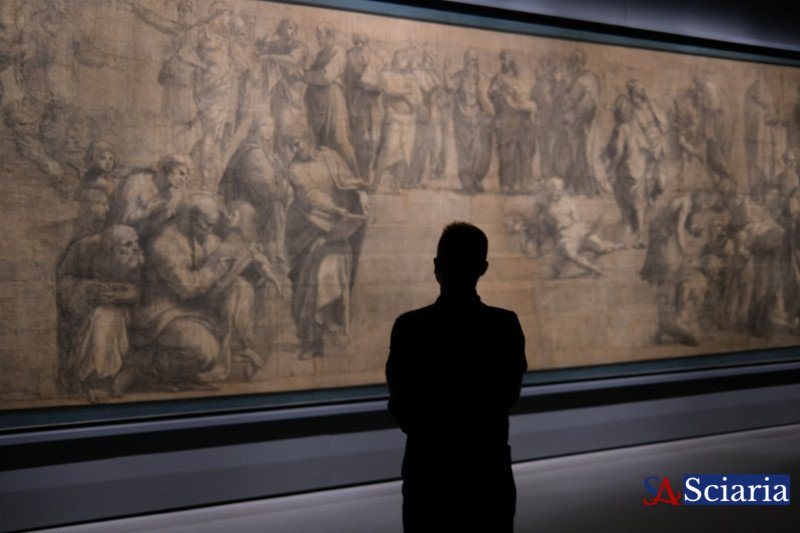
History, as we know it, is a tapestry woven from fragments – documents, oral traditions, and the physical remnants of bygone eras. But what happens when a long-lost thread reappears, gleaming anew, challenging the very pattern we thought we understood? The rediscovery of forgotten art, from intricate artifacts to monumental structures, has not just filled gaps in our historical knowledge; it has, on occasion, completely rewritten our understanding of entire civilizations and pivotal moments in time.
For centuries, human creations have vanished for countless reasons: cataclysms, conquests, neglect, or simply the slow march of decay. When these lost masterpieces resurface, they bring with them untold stories. They can confirm long-held theories, shatter deeply ingrained misconceptions, or introduce entirely new narratives that force us to re-evaluate everything we thought we knew. These aren't just aesthetic revelations; they are historical declarations, offering direct insights into the minds, technologies, and cultures of their creators, often far surpassing what written records alone could convey.
Consider the Antikythera Mechanism, an ancient Greek analog computer recovered from a shipwreck over a century ago. Initially mistaken for a mere corroded lump, its eventual painstaking restoration revealed an astronomical calculator of astonishing complexity. Dating back to the 2nd century BCE, its existence fundamentally rewrote the history of technology, proving that ancient Greeks possessed a sophistication in engineering and astronomy previously thought impossible until many centuries later. It wasn't just a lost object; it was a lost *art* of intricate clockwork design that reshaped our perception of ancient scientific prowess.
Another profound example lies in the discovery of forgotten cities and their artistic treasures. The frescoes and mosaics of Pompeii and Herculaneum, preserved under volcanic ash, provided an unprecedented, vibrant snapshot of daily Roman life, far more intimate and detailed than any written account. They revealed the colors, fashions, myths, and even the mundane advertisements that adorned their world, offering a direct window into the cultural fabric of a bustling Roman city. Similarly, the unearthing of ancient Mayan cities, with their elaborate stelae and temple carvings, decoded a complex civilization whose artistry and intellectual achievements had been largely overlooked or misunderstood by previous historians.
These instances are powerful reminders that history is not a static text but an evolving narrative, continually reshaped by new evidence. Each unearthed scroll, rediscovered statue, or reinterpreted artifact has the potential to add a new chapter, correct a forgotten footnote, or entirely turn the page on our collective past. The silent whispers of lost art continue to echo across the millennia, constantly challenging us to listen closer and broaden our understanding of human ingenuity and the rich, ever-unfolding story of our world.
Comments (0)
Rate This Blog
Top Blogs by Rating

The Silent Architect: How Cult...
By Sciaria

Nature's Immortals: Unlocking...
By Sciaria

Beyond Human Hands: Discoverin...
By Sciaria
Favorite Blog

Embrace the Uncomfortable Mirr...
By Sciaria

Beyond the Taboo: The Debt Tha...
By Sciaria

The Unseen Architects: How Cit...
By Sciaria
Related Research
upaya peningkatan kemampuan geometri siswa smp st. antonius padua sentani melalui pendekatan matematika realistik
manajemen strategi kepala madrasah dalam mengatasi kekurangan infrastruktur teknologi di madrasah ibtidaiyah
New considerations on the old breton glosses in bn1616
Share
Notice Board
- PEMBELAJARAN MENDALAM (DEEP LEARNING) DALAM PENDIDIKAN IPA: DARI KEBIJAKAN HINGGA PRAKTIK DI KELAS
- OPTIMIZING SOCIAL MEDIA FOR CHARACTER EDUCATION BASED ON LOCAL WISDOM IN THE DIGITAL ERA
- RANCANG BANGUN SISTEM INFORMASI PEMESANAN TIKET MOBIL TRAVEL MENGGUNAKAN METODE RAPID APPLICATION DEVELOPMENT BERBASIS WEB (STUDI KASUS: PT SEMPATI STAR )
 Sciaria Research