Unveiling Invisible Rivers: The Secret Paths Shaping Global Weather
- Sciaria
- Meteorology
- Aug 04, 2026
- 0 Comments
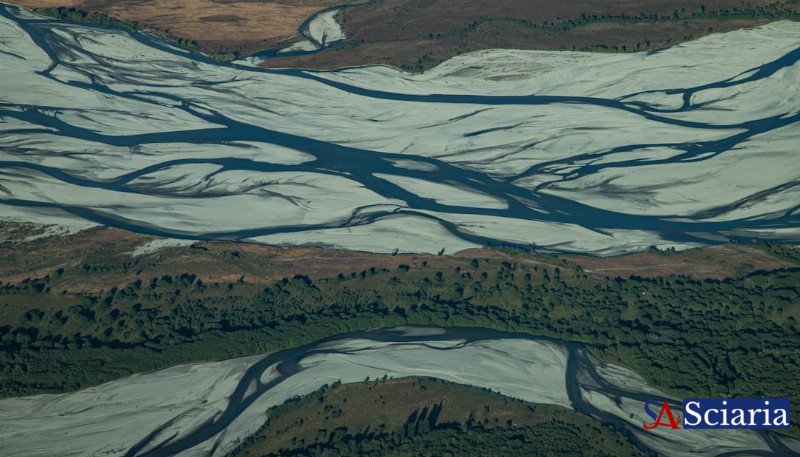
You see clouds, rain, sunshine. But what about the colossal, unseen rivers flowing high above us, orchestrating much of our planet's most dramatic weather? These aren't mythical streams, but very real "atmospheric rivers" – the invisible highways of moisture shaping our global weather patterns and delivering both life-giving rain and devastating floods. Far from the visible waterways we navigate on land, these meteorological phenomena play a critical, often misunderstood, role in Earth's hydrologic cycle and extreme weather events.
Imagine a river in the sky, often hundreds of kilometers wide and thousands of kilometers long, carrying a volume of water vapor comparable to the flow of the Amazon River. Atmospheric Rivers (ARs) are narrow, elongated corridors of concentrated water vapor transport in the lower atmosphere. Originating typically over tropical or subtropical oceans, they act like atmospheric pipelines, efficiently funneling immense amounts of moisture towards landmasses. This concentrated flow is a key mechanism for moving significant amounts of water across vast distances, fundamentally influencing precipitation patterns across continents.
When these moisture-laden arteries make landfall, especially against mountain ranges, they can unleash extraordinary precipitation. In regions like the U.S. West Coast, they are vital for water supply, contributing significantly to annual rainfall and snowpack, replenishing reservoirs, and supporting ecosystems. However, a prolonged or particularly intense AR event can transform from a blessing to a hazard, leading to extreme weather: severe flooding, dangerous mudslides, and heavy snowfall, posing significant risks to infrastructure, agriculture, and human life. Meteorologists meticulously track these events due to their profound societal and economic impacts.
The study of atmospheric rivers is a cornerstone of modern meteorology. Scientists use advanced satellite imagery, radar data, and sophisticated numerical weather prediction models to identify, track, and forecast their behavior with increasing accuracy. Understanding their dynamics is crucial for improving short-term weather forecasts, issuing timely warnings, and for predicting long-term climate impacts, as changes in AR frequency and intensity are anticipated with global warming. Unlocking the secrets of these invisible rivers is key to better preparing for our planet's ever-changing climate and mitigating the risks associated with its most powerful weather systems.
Comments (0)
Rate This Blog
Top Blogs by Rating

Beyond the Facade: Unearthing...
By Sciaria

The Quantum Compass: How Bird...
By Sciaria

Flora's Sixth Sense: Unlocking...
By Sciaria
Favorite Blog

Parasites: The Unsung Architec...
By Sciaria

Unlock Your Brainpower: Master...
By Sciaria

The Ethics of Deletion: Should...
By Sciaria
 Sciaria Research