Beyond Metal & Gears: Exploring the Flexible Future of Soft Robotics
- Sciaria
- Mechanical
- Mar 16, 2026
- 0 Comments
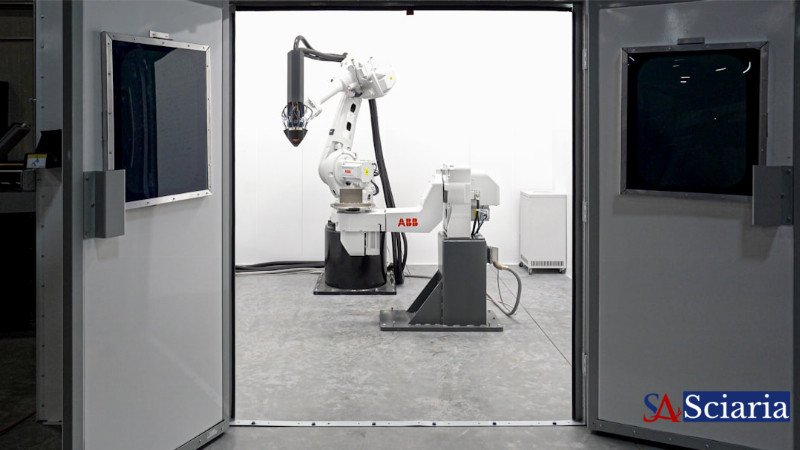
When we picture a robot, images of gleaming metal, whirring gears, and rigid, precise movements often come to mind. These traditional machines have revolutionized industries, yet their very stiffness can be a limitation in delicate environments or when interacting with humans. But what if robots didn't need to be rigid? Welcome to the exciting world of soft robotics, a revolutionary field that's reshaping our understanding of what machines can be and pushing the boundaries of mechanical engineering.
Soft robotics represents a paradigm shift, moving beyond the conventional reliance on stiff linkages and discrete joints. Instead, these innovative robots are constructed from highly deformable materials such like silicones, rubbers, and various polymers. Unlike their rigid predecessors, which achieve motion through specific joint articulations, soft robots generate complex movements through the continuous deformation of their entire compliant body. They often utilize clever actuation methods, such as pneumatic or hydraulic systems that inflate or contract internal channels, mimicking the elegant, continuous movements found in biological organisms like an octopus or an elephant's trunk.
The advantages of this bio-inspired approach are profound and multifaceted. Their inherent compliance makes soft robots incredibly safe for human-robot interaction, paving the way for truly collaborative workspaces and advanced medical devices. Their flexibility allows them to navigate complex, unstructured environments, squeeze through tight spaces, and delicately grasp fragile or irregularly shaped items without causing damage – tasks that remain exceptionally challenging for their rigid counterparts. From minimally invasive surgical tools and wearable assistive devices to advanced grippers for handling delicate manufacturing components and robust exploration robots designed for unknown terrains, soft robots are opening up entirely new possibilities across various industries.
The journey of soft robotics is still in its nascent stages, yet its potential impact is already palpable. By embracing the principles of flexibility, adaptability, and inherent safety, this field is fundamentally transforming how we design, build, and interact with machines. As material science continues to advance and fabrication techniques become more sophisticated, we can expect to see an ever-broader range of soft robotic applications transforming healthcare, manufacturing, exploration, and even our daily lives, proving that sometimes, the strongest and most versatile machines are those that are not rigid at all.
Comments (0)
Rate This Blog
Top Blogs by Rating

Beyond Perfection: Reimagining...
By Sciaria

Unmasking Policy Debt: The Sil...
By Sciaria

Beyond the Charts: The Nurse's...
By Sciaria
Favorite Blog

Beyond DNA: How Your Lifestyle...
By Sciaria

The Unseen Architect: Building...
By Sciaria

Policy Ghosts: The Unseen Rule...
By Sciaria
Related Research
Theory in determining good and bad in human actions
From development to impact: a guided-inquiry and blended learning electricity–magnetism module to foster pre-service physics teachers’ scientific creativity
Evaluating students’ perceptions of literature courses in english education: implications for curriculum development
Share
Notice Board
- PELATIHAN PEMBUATAN BAHAN AJAR KIMIA RAMAH LINGKUNGAN DENGAN PEMANFAATAN LIMBAH RUMAH TANGGA UNTUK MENINGKATKAN KREATIVITAS SISWA
- CLASSIC TYPE STURGE-WEBER SYNDROME WITH SECONDARY GLAUCOMA AND COMBINED GENERALIZED AND FOCAL EPILEPSY: A CASE REPORT
- FOTOGRAFI KOMERSIAL SEBAGAI JALAN UNTUK PARA COSPLAYER UNJUK DIRI MENJADI MODEL PROFESIONAL
 Sciaria Research