The Wet Question: Unraveling H2O's Chemistry and the Science of Wetness
- Sciaria
- Chemistry
- Nov 01, 2025
- 0 Comments
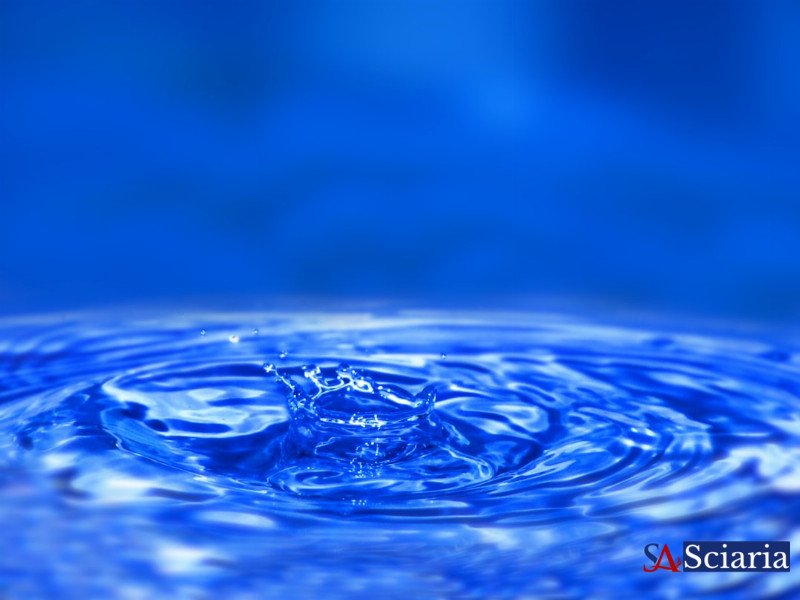
It's a riddle as old as time, or at least as old as primary school playgrounds: Is water wet? While it might seem like a philosophical brain-teaser, this seemingly simple question opens up a fascinating exploration into the fundamental chemistry of H2O. As experts in the molecular world, we can delve beyond the surface (pun intended!) to understand what 'wetness' truly means and how water's unique properties play a starring role.
To answer if water is wet, we first need to define 'wet'. In the realm of chemistry and physics, something is considered 'wet' when a liquid adheres to its surface. This adhesion is the result of intermolecular forces between the liquid molecules and the molecules of the solid surface. If the attractive forces between the liquid and the solid are stronger than the cohesive forces within the liquid itself, the liquid will spread across and 'wet' the surface. Think of a spilled glass of water on a table: the water spreads, clinging to the table, making it wet.
So, what makes water such an excellent agent of wetness? The answer lies in its remarkable molecular structure. Water (H2O) is a polar molecule, meaning it has a slight positive charge on its hydrogen atoms and a slight negative charge on its oxygen atom. This polarity enables water molecules to form strong hydrogen bonds with each other (cohesion) and with other polar or charged surfaces (adhesion). These powerful intermolecular forces allow water to readily cling to a vast array of materials, from fabric to skin to dirt, effectively 'wetting' them.
Considering this chemical perspective, we can now tackle the core question: Is water wet? From a scientific standpoint, water *makes* things wet. It is the liquid that adheres to a surface, thereby creating the state of 'wetness' on that surface. Water itself, being the very substance causing the wetness, cannot be wet in the same way a towel or a rock can be wet. A better way to think about it is that water is the *agent* of wetness, a liquid with extraordinary adhesive properties thanks to its unique molecular architecture.
Ultimately, the playful riddle 'Is water wet?' serves as a fantastic entry point into understanding basic chemical principles like polarity, hydrogen bonding, adhesion, and cohesion. It reminds us that even the most common substances hold deep scientific secrets, waiting to be uncovered by a curious mind and a fundamental grasp of chemistry. The next time you splash in a puddle, remember the intricate dance of molecules that makes everything feel so refreshingly, well, *wet*.
Comments (0)
Rate This Blog
Top Blogs by Rating

Still Hungry After Eating? Unm...
By Sciaria

The Unseen Threads: Why Democr...
By Sciaria
When Materials Think: Ushering...
By Sciaria
Favorite Blog

Unveiling the Ocean's Hidden W...
By Sciaria

The Evolution of Knowledge in...
By Sciaria

The Invisible Code: How Stella...
By Sciaria
 Sciaria Research