The Unexpected Geometry of Your Decisions: A Mathematical Exploration
- Sciaria
- Mathematics
- Mar 14, 2026
- 0 Comments
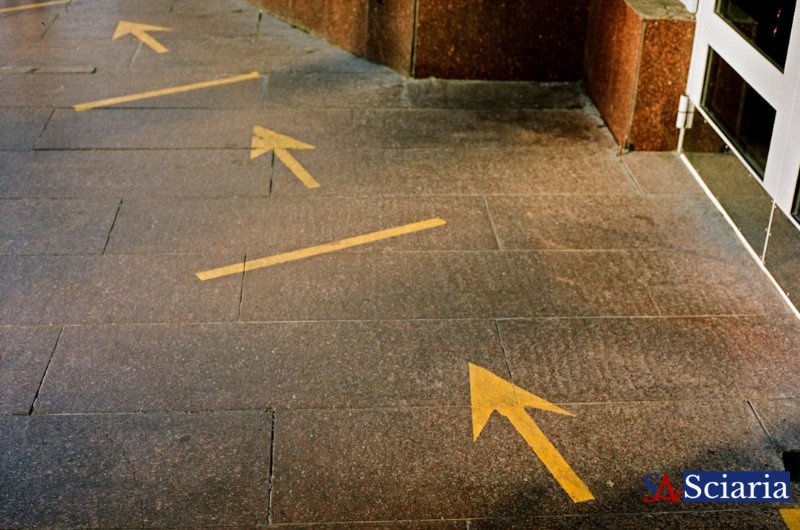
Mathematics often conjures images of complex equations, abstract theorems, and distant celestial calculations. But what if we told you that the very act of choosing, from the mundane to the monumental, possesses an intricate, underlying geometry? Every fork in the road, every path taken, and every option considered isn't just a moment in time, but a point, a line, or even a multidimensional shape in the landscape of your life. This isn't just a metaphor; it's a profound mathematical truth waiting to be uncovered.
Think of your decisions as navigating a vast, invisible geometric space. Each choice point is a node, branching out into various paths representing potential outcomes. This concept is fundamental to decision theory, often visualized as a 'decision tree,' a graph where vertices are decisions or events, and edges are the possible outcomes. When you weigh pros and cons, you're essentially mapping out vectors – directions with associated magnitudes (consequences and probabilities) – in this space. Your goal, whether consciously or not, is often to find the 'shortest path' to satisfaction or the 'optimal point' that maximizes utility, navigating constraints and boundaries much like a geometric optimization problem. The variables influencing your choice become dimensions, creating a complex, high-dimensional landscape where your ideal solution might be a specific coordinate.
Consider real-world scenarios: planning your daily commute involves finding the most efficient route, a classic shortest-path problem. Choosing a career path is like navigating an immense, multi-branched graph where each decision (education, job offer, skill development) leads to different future coordinates. Even deciding what to cook for dinner involves optimizing for taste, time, ingredients, and nutritional value within your available resources – a practical application of constraint-based optimization. By recognizing these geometric patterns, we can gain clarity. It allows us to visualize trade-offs as boundaries, opportunities as open spaces, and consequences as deviations from our intended trajectory.
Embracing this geometric perspective doesn't mean life becomes a rigid calculation, but rather that we gain a powerful framework for understanding our choices. It transforms the often-chaotic process of decision-making into something structured, analyzable, and surprisingly beautiful. Mathematics, far from being confined to textbooks, is an inherent part of our lived experience, offering unique insights into the very architecture of our free will. So, the next time you face a choice, pause and appreciate the elegant, unexpected geometry unfolding before you.
Comments (0)
Rate This Blog
Top Blogs by Rating

Engineering's Secret Weapon: T...
By Sciaria

The Elegance of Constraints: E...
By Sciaria

Invisible Worlds: How Animals...
By Sciaria
Favorite Blog

Beyond Big Data: The Strategic...
By Sciaria

Electro's Hidden Frequencies:...
By Sciaria

Invisible Ingredients: Unmaski...
By Sciaria
Related Research
The role of fertilizer subsidies in rice productivity and profitability: evidence from indonesian smallholder farmers
Fifth circuit en-banc split produces dangerous theories of racialized politics
The effect of audit opinion, financial distress, company growth on audit switching in manufacturing companies listed on the indonesia stock exchange
Share
Notice Board
- PROFIL VAGINOSIS BAKTERIAL DI POLIKLINIK KULIT DAN KELAMIN RUMAH SAKIT NGOERAH TAHUN 2021-2023
- PELATIHAN DAN PEMBUATAN VIDEO PUBLIC SERVICE COMMUNICATION UNTUK KELOMPOK SADAR WISATA "SELENDANG BIRU RINJANI" DESA WISATA KARANG SIDEMEN DI NUSA TENGGARA BARAT
- UTILIZING NATURAL MATERIALS TO STIMULATE CREATIVITY IN CHILDREN AGED 5–6 YEARS: A CLASSROOM ACTION RESEARCH STUDY IN EARLY CHILDHOOD EDUCATION
 Sciaria Research