Cosmic Archaeology: Peering into the Universe's First Moments
- Sciaria
- Astronomy
- Mar 11, 2026
- 0 Comments
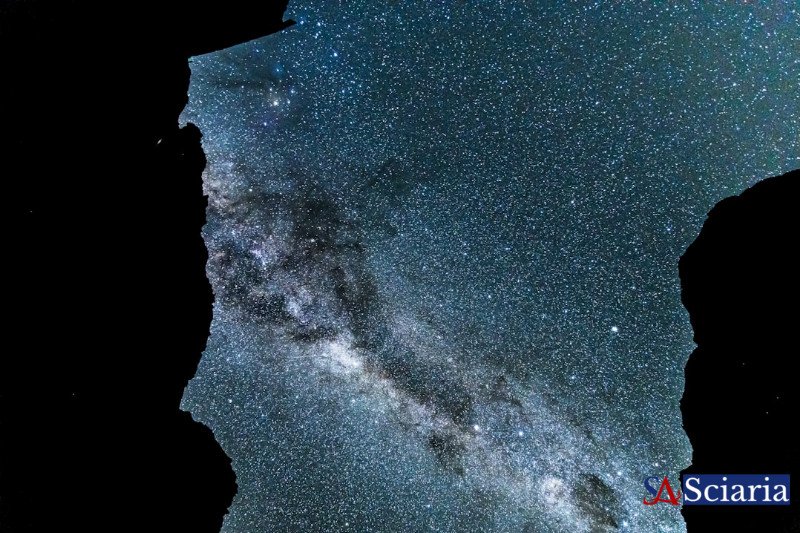
Imagine an archaeologist not digging through ancient soils, but sifting through the very fabric of space and time itself. This isn't science fiction; it's the exciting reality of cosmic archaeology, a field dedicated to unearthing the universe's most ancient relics: its first light. By studying the faint echoes of the Big Bang, astronomers are reconstructing the earliest chapters of our cosmos, revealing a story far grander and more profound than any terrestrial discovery.
The quest for the universe's 'first light' primarily focuses on two monumental phenomena. First, there's the Cosmic Microwave Background (CMB), an all-pervasive glow that is the universe's oldest detectable light, emitted just 380,000 years after the Big Bang when the cosmos cooled enough for atoms to form. Before this, the universe was an opaque, scorching plasma. After the CMB, the universe entered a period known as the 'Dark Ages.' It was dark because no stars or galaxies had yet formed. But eventually, gravity began its work, collapsing gas clouds into the very first stars and quasars. This ignited the 'Epoch of Reionization,' bathing the universe in ultraviolet light that stripped electrons from neutral hydrogen atoms, making the universe transparent once more. This reionization process represents the true 'first light' from actual celestial objects.
How do we unearth these ancient signals? It's a testament to human ingenuity and technological prowess. Observatories like the Planck satellite meticulously mapped the CMB, revealing tiny temperature fluctuations that are the seeds of today's galaxies. More recently, the James Webb Space Telescope (JWST) is revolutionizing our understanding of the Epoch of Reionization. Its infrared eyes are specifically designed to capture the incredibly redshifted light from these nascent galaxies and stars, whose ultraviolet emissions have been stretched by the universe's expansion into the infrared spectrum. Future endeavors, such as the Square Kilometre Array (SKA), promise even deeper insights, peering into the Dark Ages by detecting the faint radio signals from neutral hydrogen before the first stars burst forth.
These cosmic archaeological digs are not just about curiosity; they're fundamental to understanding our origins. By analyzing the CMB, we validate the Big Bang theory, measure the universe's age and expansion rate, and even glimpse the distribution of dark matter and dark energy. Studying the Epoch of Reionization helps us understand how the first structures formed, how galaxies evolved, and ultimately, how the universe transitioned from a dark, simple state to the vibrant, complex tapestry of stars and galaxies we see today. Each photon from these primordial eras is a precious artifact, allowing us to piece together the incredible saga of cosmic evolution, forging a deeper connection to our place in the vast, ancient universe.
Comments (0)
Rate This Blog
Top Blogs by Rating
The Human Glitch: How Our Impe...
By Sciaria

'Um' Isn't Just a Stumble: Wha...
By Sciaria

The Great Curriculum Unbundlin...
By Sciaria
Favorite Blog

The Analog Awakening: How Digi...
By Sciaria

When Operations Become Your In...
By Sciaria

Nature's Immortals: Unlocking...
By Sciaria
Related Research
The development of the sihali aek ceremonial tradition in tipang village, baktiraja district (2013–2024)
Changes in rural farmstead layouts in the knyszyn forest area
Pornography, the everyday and material culture
Share
Notice Board
- POTENTIAL OF ULTRAVIOLET GERMICIDAL IRRADIATION FOR INFECTION PREVENTION AND CONTROL OF SARS-COV-2 IN SOUTH AFRICA
- THE IMPACT OF CREDITOR COMPOSITION ON SOVEREIGN DEBT RESTRUCTURING
- THE RELATIONSHIP OF PREMENOPAUSE MOTHER'S KNOWLEDGE AND ATTITUDES WITH THE LEVEL OF ANXIETY IN FACING MENOPAUSE IN PREMENOPAUSE EMPLOYEES
 Sciaria Research